Showing posts with label children. Show all posts

Monday, April 16, 2012

Smart Solutions from the heart ....

At 75, she looked back at her life with a lot of satisfaction. At a time when norms of behaviour for a new bride in her in-law's house were fairly conservative, she was lucky to travel and set up house with her husband who worked in another town, away from home. Living with people from all over the country who came to work there, this was her introduction to the customs from different communities, that make up he mosaic that is India. Nucleisation of family life sometimes brings a different kind of freedom to a family. There is less minding of overbearing P's and Q's, and more open thinking. But she always remembered her family back home, and ensured that the children spent some fun times at their grandparents' home during the summer holidays.

Today was her little grandson's birthday. The first one after she lost her husband, ten months ago. The little boy's maternal grandparents had traveled over for the event, from out of town, and the house was all hustle and bustle with the boy's mother organizing the eats and games for the evening. The cake was home made , iced according the wishes of the little boy.

She remembered the last birthday, when her husband had distributed the prizes to all the little ones who won in the games, with the birthday boy holding his hand, jumping in excitement as his friends rushed up to get their prize. Late that night, after everyone had left, the little boy had sat with his grandfather, and opened all his fancy presents, both of them admiring the stuff, as the ladies were organizing the left over food and the mess in the living room, that remains after some boisterous 7 years olds have finished with it.

Traditionally , every birthday, an aarti was done for the little boy. He sat on a "paat" , east-west facing always; and every year, the two grandmothers, his mother, any aunts who happened to be there, as well as the household help lady who was like a family member did the aarti. His face would gleam in the light of the oil lamp, as he beamed at the ladies, and they would apply some vermilion and turmeric and rice grains on his forehead.

She sat to the side today, and watched the hustle and bustle of the preparations. She never ever sat idle and her hands were always busy with something like shelling the cardamom, or peeling cucumbers or boiled potatoes , or whatever was the requirement of that time.

The boys mother did the aarti. Then his maternal grandmother , who was nearby , did her turn, and she looked around for the other grandma. She was watching them all, an indulgent look on her face, some old memories bringing an occasional old thought into her eyes, and she smiled at the little boy.

"Aji, come, its your turn !" and he looked expectantly at her.

"I need to just get done with this for your mother", she said, " You all carry on "....

The boy's other younger grandmother understood, but didn't agree with what was happening.

Widowhood was a new factor now, and at 75 years of age, all the old customs came back to the elder grandma.She wouldn't do aarti for the little boy. It wasn't auspicious. Her heart didn't agree at all. But her head was in the grips of age old tradition.

"Tai, come , its your turn now. Its OK, we will do the cardamoms later. " the younger grandma said, trying to act casual. The little boy was not to know why his older grandma was hesitating.

She went to the older lady and spent some moments cajoling her into doing the aarti.

"No, No. Its OK. You carry on. My mind is not in it." she said. The older lady , acutely aware of her widowhood, was trying to exclude herself, thinking her participation would be unlucky.

Her daughter-in-law went over. She and her mother insisted that the older grandma participate.

"You know, Aji has to do aarti for her grandson. Its your blessing, and see, he is waiting. How can the birthday be properly celebrated otherwise ?" . And saying so, the younger grandma held the hand of the elder one, and escorted her to where the little boy sat.

Aji looked very gratefully at the ladies, her face a fleeting mixture of sorrow and joy, and slowly took charge of the aarti plate , and shielded the lamp with one hand. She bent down to apply vermilion and turmeric and rice to the little boy, and did the aarti.

The little fellow had a smile on his face, eyes twinkling, and he seemed to be holding something half hidden in the folds of his shirt, which was not tucked in yet. Sometime during the time that the ladies were busy convincing the elder grandma, that no taboo or tradition, irrespective of marital status, could stop a grandma from doing aarti to her grandson, he had quietly got up, grabbed his grandpa's photo from the side table, and was clutching it tight in his hands. The family was complete ......

She straightened up from the aarti, passed the paraphernalia to her daughter-in-law, so the lamp could be kept in front of the Gods, and looked at the younger grandma who was standing beside her. They both had tears flooding their eyes. They had no words, and none were needed. They suddenly decided there was some stuff that needed their attention in the kitchen /balcony etc and slowly made their way there.

For the little boy, something had changed. He was a big boy now. He knew that God had taken away his grandpa almost a year ago. He suspected that his grandma was missing him on this day. So he did the obvious. Grandpa watched , as grandma did the aarti, and the little boy was pleased.

His grandpa would be watching the entire birthday, from the frame on the side table .

The little boy's mother thought she noticed an extra smile playing on face in the photograph.

The two grandmas were at peace in their minds.

They couldnt get over the amazing solution offered by their little grandson. ....


This entry is a part of the contest at BlogAdda.com in association with imlee.com

Wednesday, October 26, 2011

Another Laxmi Pujan.....


We are well into the various celebrations that are done during the four days of Diwali in Maharashtra, and the second celebration is that of Laxmi Pujan , or the worship and celebration of the Godess of Wealth, Laxmi.

This is called Lakshmi Pujan,  and in many families,  there is an elaborate laying out of jewellery and valuables, in honor of the Goddess, and a worship ritual is followed, with everyone in the family dressed in their Diwali best.   Different days of Diwali are celebrated by different families in varying degrees of importance, depending on what you have traditionally followed all along.

And then I came upon, what I thought, was a very unusual Laxmi Pujan , which, my household help S., (hitherto greatly blogged about and known to readers of this blog), was checking with me about.

This morning, she suddenly took out the traditional Indian calendar where it was hung on the kitchen wall, and brought it to me .  I know she doesn't really do a religious celebration of Diwali, but it is more of a social and family holiday event for her.  

" Can you check and tell me what the actual timings for Laxmi Pujan are, today (26th) ?"  she asked me .  The Indian calendar is moon based, and the moon calendar days can change during any time of our normal sun-calendar day. I checked and confirmed for her that the timings recommended for Laxmi Pujan were between roughly 6 pm to 8:30 pm.


And I was completely intrigued because S has never followed all these rituals in all the years that I have known her.
 
S had recently become a grandma for the 4th time, with the arrival of a grandson. The new mother and the baby were, as per tradition, at her maternal home, and would  return to S.'s  abode some time later after the naming ceremony and so on, most likely after a month or two.

" Today completes 12 days after the baby's birth.  It is Laxmi Pujan , a good auspicious day. I thought I would have a small celebration for the new mother(her daughter-in-law) and baby, invite 5 ladies, honor them, place the little fellow in their lap for blessings. She has enriched us with the new grandchild, and I thought this was a nice thing to do for the new mother during Laxmi Pujan".

And she went on to tell me about some new saree she had bought to present to the new mother, her youngest daughter-in-law, as well as a fancy bonnet for the baby boy. She discussed the refreshments she was planning to serve, and how her own daughter, who was a trained mehndi artist was planning to do a wonderful design for her youngest sister-in-law, on her hand, in honor of the occasion.

All this on the day of Laxmi Pujan, when you celebrated and worshipped the Goddess of Wealth.  

And i thought what a lovely thought this was about wealth and riches in a life.   Which did not necessarily mean money. And jewellery. And the like.

In a state where girls were being named "Nakoshi" (unwanted), because they happened instead of a son,  and where, having discovered several such instances, the government was  having a huge public renaming of these girls, here was "S.",  living in these amazing unimaginable conditions , secretly hankering after a granddaughter, but immensely pleased yet with the birth of the youngest grandchild, a male,   and celebrating with the new young mother, because she has enriched the family !

And yet again, I marveled at S.'s  thought processes,  and her ability to figure out what Diwali, the bright lights, the Goddess Laxmi, and her worship, was all about......

And how lucky I was to know her .


Saturday, May 16, 2009

Little minds, Big questions.....

                                                            For 2011 :


They lived on the shores of the lake. The house was actually ancient, and the unusually small size of the windows, and the tantalizingly non horizontal window ledges often gave you the feeling of staying on a ship. Right next door was a brand new, modernistic, official looking guest house of the Institute, with undulating lawns that swept a graceful curve down to the lake.

For the little boy who lived in the old house, it was the place that he could visit on his own, to play with his friends. No traffic , no roads to cross, no dark corners and eerily moving tree branches, and he would rush home as soon as it got dark. He lived on a wooded campus, and these buildings bordering the lake had a bit more natural light than the others.

His grandmother had moved in with them. Earlier, Both his grandfather and grandmother would come to stay. But sometime when he was in first grade, his grandfather fell sick. He would often bring his cars and other things and play with them in his grandfathers room, actually because everyone was always doing something there, but mostly because his grandfather liked to watch him play and chat with him. One day, he was taken to an aunts house after school, and when he returned home in the late evening, he found that his grandfather was no longer around, and his grandmother looked different.

"God has taken him to heaven" , they told him, "because he was so sick. He will be well there".

They told him the same thing when he lost his baby brother 2 years earlier. He himself was younger then, and believed what everyone was saying. And now his grandfather. This whole thing about God was getting a bit suspicious. No one explained just how God came and took the folks with him. Was he invisible, did he come at night, how come no one heard ? And this was broad daylight. How come no one noticed anything going on ? Heaven was somewhere up there . Birds flew, but you could still watch them......

By and by his grandmother came to live with them and they settled into a nice routine. His parents worked, but came home for lunch. His mother would glance through his school books in the afternoon, and give him some assignments to do if there was no homework. His grandmother would take a short nap while he played, and then would supervise his studies as she had her afternoon tea. He was two years older now, and they were learning stuff in History at school about which his grandmother knew things. Like the struggle for Independence. She had even seen some of the people for real, when she was a young girl . And he only had photos in his text books.

Come 5 o'clock, and his friends would land up , calling out to him in sing song voices, as they tried to grab his attention , as they jumped up and down outside his window, calling him to come out and play. They were all at an age, where normal modes of entries and exits into gardens and things were to be avoided. One entered through broken fences, slid down bansiters instead of descending stairs, and the bigger their mother's eyes became, the more they tried to do such things.

He'd be just about done, and he'd then rush out with his friends to play, sometimes in the garden and sometimes on the slopes of the guest house next to their house. His grandma had her own group of other grandmas who met on the lawns there. But they waited for their sons and daughters-in-law to get home at sundown. The day was a bit cooler then, and walking was more pleasant. The elderly ladies often sat there till dinner time. The little boy would be intermittently back home with his entire gaggle of friends to drink water, attend to freshly acquired wounds and scrapes, and sometimes, simply to show off some freshly acquired book or toy contraption . He and his grandmother shared a room and the boys would be all over the place with their grubby hands and feet. Around eightish, his mother would dispatch him once again next door to the guest house lawns, to escort his grandma home. She didn't see too well in the dark, and he would go meet her and escort her back , holding on to her hand, to the highly approving glances of her friends, whose grandchildren were older and so, otherwise busy.


Into this well set wonderful routine, his mother came home one day to find a strange expression on her mother -in-law's face. Her eyes were full, but there was no sadness. Just a sense of wonder.

That afternoon, they had sat down to do history. Talking about the new stuff he was learning.

"Aji (=grandma), just be grateful you didn't live around the time Raja Ram Mohan Roy lived", he said, his finger on some filling-in-the-blanks-assignment on a page of his book.

(Raja Ram Mohun Roy of Bengal was one of India's greatest social reformers in the 19th century, and many of these reforms were beneficial to women. He was opposed to the idea of, and worked for the abolition of the practice of "Sati" where widows burnt themselves on their husbands funeral pyre)

She was nonplussed.

What was wrong with Raja Ram Mohun Roy, and of all the people she could think of, why was this 7 year old chap against him ? Where did she come into all this talk of freedom fighters, great leaders of India, and the Independence movement etc ?


She looked at him questioningly, taking him very seriously, as only grandmothers can.

He looked at her, alarm in his eyes. Then he put out his arm, and placed his hand in her lap, as if to let her know, that, come what may, he was there...


"You know , if Aba (=grandpa) and you had lived during those times, people would have made you perform "Sati" after he died !".....

He probably had gory visions based on the terrible descriptions and graphics shown in various textbooks , and for a minute, he just held on tight to her hand.


She was stunned. His grandfather's death still played on his mind. When he studied the social reforms introduced by the Bengali gentleman in class, this must have occurred to him. For a child with a penchant for vivid imagination, this was just too traumatic. First they told him that God took his grandfather, and now Ram Mohun Roy and the terrible practice of Sati.

Then the humor just hit her. Which was as well, as the whole scenario was getting a bit serious. It was more than a century since the terrible custom was abolished. Even in her own childhood, she didn't wonder too much about these things; widow remarriage, even then, was being encouraged, education for girls was considered useful. And h
ere was this 7 year old chap, totally trauma struck, with the concept of his grandpa's death, his grandma, and Sati.

"Not to worry. Your grandfather would not have permitted that. Those were the old days, and everything has changed now. Everyone's mother today is educated, and some , like your mother and aunts , even work. And all this is because Raja Ram Mohun Roy convinced the government then to make a law saying Sati was not allowed. "

She got up to make a cup of tea, and bring him his afternoon glass of milk; but really to wipe away her tears. She couldn't figure out whether they were of joy or sadness. Certainly more of the former than the latter. She and her grandson were 70 years apart. She had other, much older grandchildren, but this was the first one to get into a panic over an age old practice followed in the early 19th century, and worry about her .

He went off shortly to play with his friends and his grandma entertained her son and daughter-in-aw with this story when they returned.

He and his grandmother enjoyed each other's company for a few more years. She passed away one night in her sleep, when he was asleep . He was still a young child.

Wordlessly, stoically, chin up,
after bending and touching his grandma's feet, he went off to his normal day at school , taken care of , by the neighbors, for the day. Young children are not part of the various formalities associated with funerals.

By then I think he had figured out what happens. When he came back with his friend's parents, late that evening after everyone reached home, he didn't ask any questions. There were a whole bunch of folks staying over. He kept fiddling with his books, pestering a cousin to sharpen his pencil just so. He went into the kitchen before bedtime, and poured himself a glass of milk, his hand unaccustomed to handling steel containers with about 2 litres of milk; mixed the cocoa into it, just like his grandma did for him, and came and sipped it, slowly, as he sat leaning next to his Dad. He wouldn't be sleeping in the room he shared with grandma for a long time after that.

This time there was no confusion about the mechanics of how one went away with God without anyone noticing.

Miraculously, he had learned the most difficult. He had learned to accept. Death.


(A true story....)

Get your story published in The Chicken Soup for the Indian Soul – A book of Miracles at BlogAdda

Thursday, February 12, 2009

Games of life in the time of e....


50 years after I graduated from playing hopscotch, known in my childhood as "tipri", every time I see wonderful Shahbad stone floors, say in older houses, I have to restrain my self from doing the stuff, mostly out of consideration for the hosts floors, but also out of a sense of consideration for folks having to face certain embarrassing visuals.

So it was with a great sense of delight that I learned that a bunch of parents who did surveys at a parenting website, had declared the following to be the Top 10 playground games in the world
: Hopscotch, Hide and Seek, Skipping, What's the Time Mr Wolf?, British Bulldog, Conkers, Kiss Chase, Chinese Whispers, Cats cradle, Oranges and Lemons....

Except for the 1st 3, and the last, I cannot recall ever having played the others, partially because (a) I do not and have not stayed in Britain, (b) We have active Moral Police, (c) With all the whispering going on here, why would anyone be interested in Chinese whispers , and (d) I don't play with Wolves and Cats.

There was a huge patio with a swing in our childhood house, and the floor was paved with Shahbad stone. The masons seemed to have been thinking of us when they fixed the stone. Tipri or hopscotch was a favourite with us girls, and we never needed to draw chalk outlines on this stone. We girls would be busy hopping on one leg, sometimes even leaping on one foot over certain squares, taking turns, and it wasn't unknown for our brothers and other similarly motivated folks to sit on that large swing, and casually activate it so that someone at the last square had to counter with the swinging stuff , and would loose her balance, and thus, a turn. For some reason, boys never played tipri.

Hide and Seek , of course , was the game of choice which was played with several variations. the original game had a person who was the "den" who counted up to 100, while all of us went to hide. Smart dens counted in tables of 10. And then searched for the hidden folks, all over the house, including behind people.

A variation of this was a game , which for some reason, was called "Dabba Ice Pice". And it had absolutely nothing to do with the Dabbawalas's who attended Prince Charles's second wedding, Ice, or Pice, the last of which was actually the name of our old currency, before 1957, the value of which was 1/64th of a rupee. The game had the person who was the den doing the usual counting of numbers, but there was a ramshackle tin box placed prominently in the playing area. Every time the den spotted someone, he would shout, "so-and-so, dabba-ice-pice" and the person was declared"out". During this phase if someone (hiding), managed to suddenly appear and kick the tin box from its place, all the caught people were declared free and went to hide again, to the intense trauma of the "den".

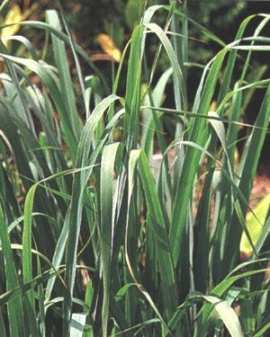
Running and catching each other , were again, games played with different variations. I like to think there was one which was unique to our house. There was a huge annular space around our house, and thanks to the tradition of having common medicinal plants growing in the garden area, we had a few lemon grass plants. We used to play a usual game of the "den" running after and catching others. Whoever was caught had to lie down right there, whether it was in a flower bed, dirt, path of approaching guests or just at the garage door etc.

The den continued the catching process of others elsewhere. Those uncaught, would tear some lemongrass and rush with it , and hold it to the caught person's nose, shouting "medicine, medicine", and the earlier caught child would be de-caught and could again run. This game was called "Medicine". We used the love the smell of the lemon grass, and even today , when gardens have lost out in Mumbai, and I still see lemongrass being sold in markets , it takes me back to those "medicine" days.


Several ball games involved running around and hitting a person with a tennis ball to get him out. which was a bit difficult in gardens with sudden constructions at corners, approaching visitors , parked cars and the like, but might explain abilities of certain bowlers in Cricket. Notice that India does well in games where a small size ball has to be thrown by hand. Football, basketball, volleyball, hockey, well, now you know, why we are still trying there.....


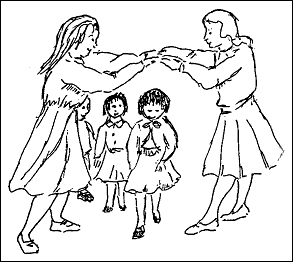
While Skipping and oranges and lemons were really considered sissy games, played mostly in the recess at school ( I never saw my brother skipping), there would be certain poems we sang while doing this skipping, vaguely having to do with "two little dicky birds. (Nothing to do with the one Cricket Umpire of the same name.) ". It must be explained here that my experience was with a school where the medium of instruction was English. I probably missed out on even more wonderful games in other language schools.


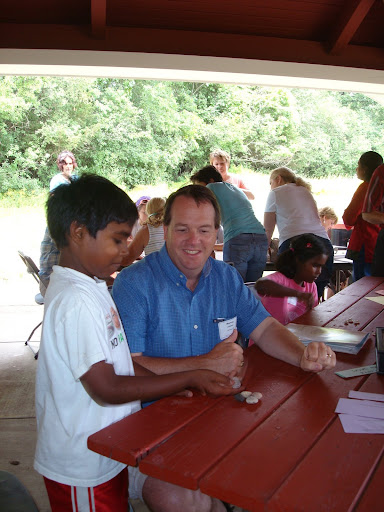
Sagargote (shown alongside while a child demonstrates to a tourist, on a table), was a game unique amongst girls in my childhood. Turns out that a lot of the government state gazettes of the old days, writing about recreation amidst the population then, mention this game.

These were special rounded seeds/pebbles, usually grey in color. You started by strewing them around as you sat on the floor, one foot outstretched. One pebble/ sagargota was flung up, and you picked up one from the floor before you caught it back. Once you had picked up all, without disturbing any on the floor, you again strew them on the floor, and this time you picked them two at a time, before catching the flung one. If you disturbed any on the floor (not marked for pickup), you missed a chance. Champion sagargota players were capable of picking up widely strewn 6-7 gotas at a time, by throwing the single flung sagargota high enough and then catching it. This game took some learning, but was an amazing recreation on hot summer afternoons in cool balconies and verandahs, when you had had your fill of climbing mango trees, plucking raw mangoes and surreptitiously enjoying them with salt and cayenne pepper.......

There was this great game called Statue. Whenever some person who was the den, said "statue" and gesticulated as if with a gun (for some weird reason), those of us running towards him had to go into a dead stop. Some had perfected the art, of freezing with a grin, an angry face, an arm out to hit someone, and even someone trying to smooth a flying skirt. The den then proceeded to appear in front of each and say things to make us laugh, thereby getting us to move, and be disqualified. Most of the time, the rest of the statues were in splits. Sometimes, someone's desperate parents, would be calling out for some work, and it was a divided loyalty between being a statue and answering parental summons.

At various points in all games, one could hold a fist (fingers outward) against one's lips, lick the back of the hand, loudly, say "Time please", and keep things in "abeyance"; that this was used by tricky players in lots of unscrupulous ways was known, accepted, and sometimes admired.


It is impossible to name all the games we played. These games weren't defined anywhere. They got written about later because they were first played by children who had nothing ready-made. Organized sports was there. In schools and otherwise. But that was a different world.

This was where we could innovate. Change rules. Fight. Take revenge for perceived wrongs. Stand up for our friends. Laugh. Cry. And get back to our houses, faces shining with perspiration, clothes muddy but smelling of lemon grass and mud, to be told to wash and get organized for predinner prayers, and yes, recitation of maths tables. We never questioned that. Maybe we thought of it as a game. Maybe not. But the maths improved.

Today's games have Instruction sheets, Documentations, Help, and are essentially repetitive. They are played on screens by pushing some buttons on a keyboard. Whether its driving a fancy car that can go at 500 mph flouting all known rules, or a soldier who can burst through a cement wall, or a dragon that can eat an army, its all achieved with a movement of an inch or so to the left or right, by your finger, as you sit, muscles tense, neck tense, and eyes glaring at a screen.

Whats worse, these games cost. Money. ( We talk about health some other time ). Shops have sales, and children demand that these be bought. Then someone starts making a noise about "multiplayer" games. A profit crazed company organizes competitions, someone at some university does research to show how some kind of learning is happening, Microsoft makes news when it buys this company, prizes are declared, and an entire generation of children become e-children.

I have a firm belief in the cyclic patterns in life.

We are slowly reaching the excess level as far as e-games are concerned. Hospscotch, hide and seek, statues etc caused no garbage. All these e-games do. Think of millions of children , holding these little screens, and clicking away to irritating sounds, and you'll get mounds of unbiodegradable garbage.

Then global warming hits you. Inconvenient or not.

What surely would be wonderful, is to sit back in the fag evening of ones life, and watch the children in your family once again enjoy the hopsscotch, the skipping, the running, the medicine, and yes, the Dabba Ice Pice......Call out to them at dinnertime, and NOT HAVE THEM EMERGE FROM THE COMPUTER ROOM, BRAINS IN BROWNIAN MOTION...........