Culture, is not a cake, where you measure the ingredients, treat them in specific dynamic ways, apply the requisite heat for a longish time, and then expect to always get the same result. There is no beginning and end, but there is an existence and fine tuning of the culture. And most of all there is a give and take, that enriches.
German Chancellor Angela Merkel is recently reported to have announced to her countrymen, that, her country's efforts at becoming a multicultural society , had failed. And she then attributed that to the refusal of the (primarily Turkish) immigrant workforce to learn German, and fit in with the German Christian way of life.
On the other hand , Bengaluru (Bangalore to you uncultured types :-) ), currently groaning under the onslaught of folks from across the country and the world, (thanks to being a great IT and industrial hub) , seems to taking on a cosmopolitan multicultural hue, and there are local son -Booker Prize winners , exhorting the natives, to clutch close their language and ethos and save it from the external culture attack .
Actually, if you think about it, Europe is a bit like India. A federation of areas, organized almost linguistically. French, German, Italian, Spanish.... Some economically very good. Some not so good. Others borderline. Europeans can travel freely through the set of countries, seamlessly passing through border check posts. Languages overlap at these places. Economies probably don't. The various countries have attitudes. On family. Religion. Importance of money. Attitude towards children. Rules. Government interference. Etc Etc. Northwards in Europe, things are a bit conservative. Southwards, things get a bit easy, sometimes chaotic. People often look a bit different. Things are more "kinder-freundlich" .
All a bit like India. (Of course we are totally kinder-freundlich....across the country). Linguistically organized states. Some poor-cousin states. Some trying to match Shanghai :-) . Yes, we can travel freely through these states. Unlike Europe, we boast of languages and dialects in double digits, often with confusing scripts and random root language sources. But there is one huge difference. We have a large amount of religions being followed here, and no state has a monopoly on a given religion. Not because someone made a rule about it, but because , throughout history, folks of various religions have settled across India, and made their lives there. We now (1950) have a constitution that upholds secularism, but we didn't need a rule to teach people that. Yes, sometimes, events and subsequent trauma has caused communities to shift geographically. Sometimes, economics and opportunities have caused these shifts.
And so I wonder, can culture be implemented by order a la Frau Merkel ? Can it be installed by brow beating folks a la the various Senas ? How much attention do we attach to sloganeering masses ? Specific religion centric rules ? Codes of dress ? Gender specific laws ? Vote garnering subsidies ?
Where does culture actually start ?
In the family ?
3 stories.
A family friend's daughter , a Hindu, and her Business School classmate , a Moslem, wanted to get married. The families lived in different metro cities. Both the children were very close to their respective extended families. But a grandparent was there in only one of the families. The girl's. The parents wanted only happiness for the kids. The boy's father and uncles, came to visit the girl's family. The meeting was very cordial.
But what stayed in the minds of all, was the fact, that in a small living room (as Mumbai houses tend to have), the boy's uncles refused to sit on chairs, and sat cross legged on the carpet, out of respect for the girl's grandmother in her late eighties, seated on the divan, who had come especially to meet them. That's culture.
Today, the relatives speak of the girl returning to her folks for her first delivery as per tradition, and her ma-in-law, a Moslem, coming on several visits subsequently to visit her at her maternal abode, play with the grandson, and finally taking her daughter-in-law home with great pomp and celebration.
Sometimes you make friends with folks totally out of the blue. We have such a friend in Goa, who we met in 1975. Belongs to one of Goa's well known staunch Catholic families, with a surname having lots of prepositions and Latin names and hyphens. With one of those wonderful rambling old houses, with a personalised chapel, wine cellars , massive old kitchens churning out lip smacking stuff. As was customary in her young days, , she had gone to Portugal, and was fluent in Portuguese. But as was also customary, she started working early, which took her around India meeting interesting and well known folks. She decided to get married to a Hindu gentleman from Bengal.
While there wasn't too much of a hue and cry from his side, she did tell me with a laugh later on, that after their initial shock and disappointment , when she explained to her parents, they were pleased that the person she was marrying was at least a Brahmin ! Turns out , that fine distinctions, a la caste system, still exist in Catholic Goan society. A Brahminical way of thinking. They were married for many years, both doted upon by the respective in laws, till the husband passed away. She remains an honored respected member of her husband's Bengali extended family at all the religious and cultural family functions.
That is culture . Not the nitpicking in the name of religion, language and color.
And finally, here is an international story Frau Merkel might learn from.
40 years ago, I did grad school in the US and my very first apartment roommate and I have been in touch through all these years. We knew each other's extended families, from the old days, and although we couldn't meet physically very often, we made up for that in our long newsy emails, and confidences .
Her parents lived well into their late nineties, greatly cared for by their daughters. Long hospitalizations, the impending trauma of a loss, how to deal with it, was something she would write to me, and we found out, that both our religions, actually upheld the same kind of teachings; family responsibilities, the honor in being the primary caretaker of a loved one, the thought that in our minds, the person doesn't go away (and never mind all those arguments about reincarnations etc). A few months after her father passed away, I underwent a very traumatic event of suddenly losing my mother over a few hours. It took a long time to come to terms with things. Of course the "inclusive" nature of family mourning in India helped, but one struggled with oneself, and in anger at what had happened. My friend and I were in touch, and we communicated a lot by email.
One fine day, I received an envelope by airmail. It was a card announcing a memorial Mass, in honor of my mother, being held by my friend and her children, at her church, presided over by her pastor. Of course, by the time the card reached me (12 days) , the event had already happened at the church 12,000 miles away. I was totally stunned. And immensely honored . Here was a mass being held, by a close friend, who understood what the loss was, and tried to handle it the way she thought best for me. By Prayer. Something she believed in.
My late mother was an enlightened Hindu religious lady, who was once a trustee (the first and till date the only woman trustee) of one of the most famous temples in Pune). She enjoyed attending and presiding over the beautiful pujas and celebrations, , but she also taught us to be respectful of other religions and their rituals. This was a family belief, passed down through generations, and she was very strict about this.
Somewhere Up There, I can see her nodding her head , eyes full, at what her daughter and her friend had been up to. She must have been present in spirit at that Mass.
I guess we will never learn . It isn't about power, rigid rules, disrespect and inhuman behaviour .
Culture is how we were brought up. And how we plan to bring up our children.
The boundary conditions may have changed, but the rules of decent behaviour remain the same....

Showing posts with label religion. Show all posts
Showing posts with label religion. Show all posts
Thursday, October 21, 2010

Monday, September 07, 2009
Your Good Name, please ?
It might be a considerable understatement, but so many things in my country are mind boggling to say the least.
Being the first person in my family to go to a what was called an "English-medium " school (where the medium of instruction was English), my introduction to our wide variety of religions, castes , languages and names here, happened very early , possibly in Nursery School. While we learned enough about religion and caste in social studies much later, the real fun part was the names, and all my friends who went to Marathi(my mother tongue) medium schools, missed out on this.
This was the middle fifties, and my nursery school teacher , a Mrs Rowe, wore frocks, high heels, lipstick, and played the piano, and we would sing our nursery rhymes, enraptured, because she looked like someone on movie posters. Later on in elementary classes we had teachers called Arbuthnott and Williams and Desouza.

 An entire batch of Parsi (Zorastrian) teachers took over in 4th grade. Suddenly in some cases, frocks gave way to sarees, worn , what I thought, was in the wrong directions. They had names like Mrs Dewan, Miss Ghaswalla, Miss Kerawala, Mrs Pastakia, Mrs Cooper . Many of them lived in Western style, and their children played the piano and got prizes in school. My friends in class were a great mix of Christians, Parsees, Moslems, Hindus, Sikhs, and Anglo-Indians. The early sixties in high school, saw me change schools, and now we had a mix of Moslem, Parsi, Hindu, Jewish and Christian teachers.
That was my great introduction to Indian Naming Systems.
My community, a subset amidst Hindu's , were rigid about our middle names being our father's first name, and the last name/surname being the family name. So , say, Barack Obama, would have been Barack Barack Obama , because his father was Barack Hussein Obama.
In the Parsee (Zorastrian) community, it was customary to indicate the profession through the surname or last name. So someone who merchandized wine/liquor would be Daruwala (Daru=liquor), fodder merchants (Ghaswalla, ghas = fodder), land owners (Poonawalla, Billimoria, Mahabaleshwarwalla, Bhiwandiwala), professions (Patel,Driver,Treasurywalla,Dewan). They often used their father's name as the middle name.
Our late PM Mrs Indira Gandhi was married to a Parsi, Feroze Gandhi. Had his name been Feroze Daruwala, history might have taken an unexpected turn.
Given that Obama senior worked in the Kenyan Minsitry of Finance, a Parsi Obama would have been Barack Barack Treasurywala ....
Sikhs normally keep things simple. Sikhs usually have unigender names distinguishable only by the last names, which are either Singh for males and Kaur for females. So Obama would be Barack Singh Obama, and his daughter would be Malia Kaur Obama.
Anyone with friends from South India, always ended up being good at spelling.
Their names were always traditional and religious, and they always enjoyed having several initials. Unlike Hindus and Parsis in my state, you couldn't tell who was whose son, by simply hearing a South Indian Hindu name. The child's name was often preceded by an initial, corresponding to his father's name. Sometimes even in addition to the grandfather's name. As if this wasn't enough, folks enjoyed adding an initial, corresponding to their native place. What is interesting, is that Moslems who hailed from the South of India often followed these customs.
Our ex-president, President (Dr.) A. P. J. Abdul Kalam, had initials that indicated that he was the son of Januladabdeen, grandson of Pakir, and great grandson of Avul. He could have added one more initial to indicate his native place in Kerala State, but did not.
And so Obama would be H. C. O. B. Barack (standing for Hawaii Chicago Obama Barack Barack ) and his daughter would be H. C. O. B. Malia.
Upto 1995 the current record for maximum number of initials was held by M. S. S. R. C. V. L. N. S Chakaravarthy of Karnataka , with a total of 71 letters in the expansion.
Just in case people were getting attracted towards modern short names like Kavi , Suresh, Ajit etc, the Chennai Municipal authorities announced recently that folks naming their children after heavenly folks in the approved old style, would be gifted a gold coin on registering a birth.
It might explain the reason why the US Spelling Bee finals always have a good proportion of children from South Indian families. Its all those complicated names they learn to spell from kindergaarten.
Which is not to say, that traditional methods are slavishly followed all the time. There are some people who are such great admirers of International personalities, that they appropriate those names too, regardless of whether they are first names or family names.
The Alemao family of Goa has members named as Churchill B. Alemao and his brothers, Roosevelt B. Alemao and Kennedy B. Alemao, with Mr Churchill being a member of Parliament in India ! There are leading political and powerful luminaries in Chennai who answer to the name M. K. Stalin, and one of the cricketers selected to represent Chennai Super Kings in the Indian Premier League is named Napoleon Einstein.
And we also have our share of modern types, who experiment and name their children as Proton Padmanabhan, Alpha Jyothis and Omega Jyothis. I am sure they will miss out on the Chennai Municipality Gold Coin offer.
However, it has taken an uneducated man from one of India's most backward states (Uttar Pradesh), to show how children should be named without worrying about anything like religion, parental names, family names, or place of origin.
The Times of India (Monday Sept 7, 2009) reports that labourer Mithai Lal, 45, and his wife Chandrasena, 42, named their seven children after the political leaders as they believe that this would bring them good fortune.
And so they have an all India set up in their house, named after folks who have never seen eye to eye on anything. And Mithai Lal always includes the last names of the leaders.
"Lucknow: Here Jayalalithaa (leading Southern politician) takes Bal Thackeray (Erstwhile political boss in Maharashtra) on her lap when he sobs, Manmohan Singh (our current PM) is fond of riding on Mulayam Singh’s (Leading Northern politician, PM aspirant), shoulders, while Kalyan Singh and Rajnath Singh (both wily northern politicians) have no differences and love playing cricket with Giani Zail Singh (Our late Ex-President, an accomodating Sikh politician). The next one to join them could well be Mayawati (today's leading northern politician, better known for erecting statues to herself).
The couple expects one more child later this year and hopes it will be a girl so that they can name her after UP Chief Minister Mayawati. The family lives in Jalalpur town in UP’s Ambedkar Nagar district, 180 km from Lucknow. “As I firmly believe names can change one’s destiny, I named my six sons and one daughter after popular politicians of the country,’’ Mithai Lal said.
While 18-year-old Mulayam is the eldest son, the youngest, Bal Thackeray, is just five months. The others sons—Kalyan Singh, Zail Singh, Rajnath Singh and Manmohan Singh—are 16, 15, 13 and five, respectively. Jayalalitha is eight years old. “Despite coming from a Dalit community, but braving all odds, Behenji (Maya) emerged as one of the most powerful politicians of the country. We too belong to the community and want to have a daughter who could make her parents feel proud like Mayawati,’’ Chandrasena said"
Just wondering, what choices they would consider if they have , say one more son and one more daughter .
Maybe go International. And name a son after George Bush. Or even Prince Charles. And maybe a daughter after Hilary Clinton.
Hmm.
Older folks in India never ask your name. They always ask what "Your Good Name " is .
Regardless of whether you are named after any politician.....national or international.
Thats why I am Ugich Konitari . It means , "Just Somebody, Just Like That".
Being the first person in my family to go to a what was called an "English-medium " school (where the medium of instruction was English), my introduction to our wide variety of religions, castes , languages and names here, happened very early , possibly in Nursery School. While we learned enough about religion and caste in social studies much later, the real fun part was the names, and all my friends who went to Marathi(my mother tongue) medium schools, missed out on this.
This was the middle fifties, and my nursery school teacher , a Mrs Rowe, wore frocks, high heels, lipstick, and played the piano, and we would sing our nursery rhymes, enraptured, because she looked like someone on movie posters. Later on in elementary classes we had teachers called Arbuthnott and Williams and Desouza.

 An entire batch of Parsi (Zorastrian) teachers took over in 4th grade. Suddenly in some cases, frocks gave way to sarees, worn , what I thought, was in the wrong directions. They had names like Mrs Dewan, Miss Ghaswalla, Miss Kerawala, Mrs Pastakia, Mrs Cooper . Many of them lived in Western style, and their children played the piano and got prizes in school. My friends in class were a great mix of Christians, Parsees, Moslems, Hindus, Sikhs, and Anglo-Indians. The early sixties in high school, saw me change schools, and now we had a mix of Moslem, Parsi, Hindu, Jewish and Christian teachers.
That was my great introduction to Indian Naming Systems.
My community, a subset amidst Hindu's , were rigid about our middle names being our father's first name, and the last name/surname being the family name. So , say, Barack Obama, would have been Barack Barack Obama , because his father was Barack Hussein Obama.
In the Parsee (Zorastrian) community, it was customary to indicate the profession through the surname or last name. So someone who merchandized wine/liquor would be Daruwala (Daru=liquor), fodder merchants (Ghaswalla, ghas = fodder), land owners (Poonawalla, Billimoria, Mahabaleshwarwalla, Bhiwandiwala), professions (Patel,Driver,Treasurywalla,Dewan). They often used their father's name as the middle name.
Our late PM Mrs Indira Gandhi was married to a Parsi, Feroze Gandhi. Had his name been Feroze Daruwala, history might have taken an unexpected turn.
Given that Obama senior worked in the Kenyan Minsitry of Finance, a Parsi Obama would have been Barack Barack Treasurywala ....
Sikhs normally keep things simple. Sikhs usually have unigender names distinguishable only by the last names, which are either Singh for males and Kaur for females. So Obama would be Barack Singh Obama, and his daughter would be Malia Kaur Obama.
Anyone with friends from South India, always ended up being good at spelling.
Their names were always traditional and religious, and they always enjoyed having several initials. Unlike Hindus and Parsis in my state, you couldn't tell who was whose son, by simply hearing a South Indian Hindu name. The child's name was often preceded by an initial, corresponding to his father's name. Sometimes even in addition to the grandfather's name. As if this wasn't enough, folks enjoyed adding an initial, corresponding to their native place. What is interesting, is that Moslems who hailed from the South of India often followed these customs.
Our ex-president, President (Dr.) A. P. J. Abdul Kalam, had initials that indicated that he was the son of Januladabdeen, grandson of Pakir, and great grandson of Avul. He could have added one more initial to indicate his native place in Kerala State, but did not.
And so Obama would be H. C. O. B. Barack (standing for Hawaii Chicago Obama Barack Barack ) and his daughter would be H. C. O. B. Malia.
Upto 1995 the current record for maximum number of initials was held by M. S. S. R. C. V. L. N. S Chakaravarthy of Karnataka , with a total of 71 letters in the expansion.
Just in case people were getting attracted towards modern short names like Kavi , Suresh, Ajit etc, the Chennai Municipal authorities announced recently that folks naming their children after heavenly folks in the approved old style, would be gifted a gold coin on registering a birth.
It might explain the reason why the US Spelling Bee finals always have a good proportion of children from South Indian families. Its all those complicated names they learn to spell from kindergaarten.
Which is not to say, that traditional methods are slavishly followed all the time. There are some people who are such great admirers of International personalities, that they appropriate those names too, regardless of whether they are first names or family names.
The Alemao family of Goa has members named as Churchill B. Alemao and his brothers, Roosevelt B. Alemao and Kennedy B. Alemao, with Mr Churchill being a member of Parliament in India ! There are leading political and powerful luminaries in Chennai who answer to the name M. K. Stalin, and one of the cricketers selected to represent Chennai Super Kings in the Indian Premier League is named Napoleon Einstein.
And we also have our share of modern types, who experiment and name their children as Proton Padmanabhan, Alpha Jyothis and Omega Jyothis. I am sure they will miss out on the Chennai Municipality Gold Coin offer.
However, it has taken an uneducated man from one of India's most backward states (Uttar Pradesh), to show how children should be named without worrying about anything like religion, parental names, family names, or place of origin.
The Times of India (Monday Sept 7, 2009) reports that labourer Mithai Lal, 45, and his wife Chandrasena, 42, named their seven children after the political leaders as they believe that this would bring them good fortune.
And so they have an all India set up in their house, named after folks who have never seen eye to eye on anything. And Mithai Lal always includes the last names of the leaders.
"Lucknow: Here Jayalalithaa (leading Southern politician) takes Bal Thackeray (Erstwhile political boss in Maharashtra) on her lap when he sobs, Manmohan Singh (our current PM) is fond of riding on Mulayam Singh’s (Leading Northern politician, PM aspirant), shoulders, while Kalyan Singh and Rajnath Singh (both wily northern politicians) have no differences and love playing cricket with Giani Zail Singh (Our late Ex-President, an accomodating Sikh politician). The next one to join them could well be Mayawati (today's leading northern politician, better known for erecting statues to herself).
The couple expects one more child later this year and hopes it will be a girl so that they can name her after UP Chief Minister Mayawati. The family lives in Jalalpur town in UP’s Ambedkar Nagar district, 180 km from Lucknow. “As I firmly believe names can change one’s destiny, I named my six sons and one daughter after popular politicians of the country,’’ Mithai Lal said.
While 18-year-old Mulayam is the eldest son, the youngest, Bal Thackeray, is just five months. The others sons—Kalyan Singh, Zail Singh, Rajnath Singh and Manmohan Singh—are 16, 15, 13 and five, respectively. Jayalalitha is eight years old. “Despite coming from a Dalit community, but braving all odds, Behenji (Maya) emerged as one of the most powerful politicians of the country. We too belong to the community and want to have a daughter who could make her parents feel proud like Mayawati,’’ Chandrasena said"
Just wondering, what choices they would consider if they have , say one more son and one more daughter .
Maybe go International. And name a son after George Bush. Or even Prince Charles. And maybe a daughter after Hilary Clinton.
Hmm.
Older folks in India never ask your name. They always ask what "Your Good Name " is .
Regardless of whether you are named after any politician.....national or international.
Thats why I am Ugich Konitari . It means , "Just Somebody, Just Like That".
Tuesday, November 18, 2008
Good neighbors, better friends.........सखे शेजारिणी.****.(अरुण दात्यांचे गाणे ऐका...to listen to Arun Date's famous song, scroll to end of post.. )
They would often go around to watch the new building coming up. There was a good chance they would make the list, when flats were allotted. Two of them would soon be three, and any increase in domestic space was more than welcome.
And so it happened that the monsoon of that year saw them move into a flat. Shifting from a furnished dorm to a 5 room flat, with kitchens and bathrooms that were all yours. You could have folks over to stay. No furniture ? Never mind. Throw mattresses on the floor, and chat away the whole night amidst endless cups of coffee, and abnormal hunger pangs at weird times, fanned by a sense of being a pseudo-pioneer, finally moving into a house you could call your own; (but isn't).
For a long time they didn't know who their neighbors would be. People were shifting into flats over a week. Everyone else had so much furniture; they were shifting there from older and/or smaller flats. She would watch the various moving furniture fashions with interest. Old, modern, heirloom, expensive,tacky, sometimes everything together. Every one was much older than them, with college going children. And so there was much coming and going of young folks in all the neighboring flats.
Naseem and her husband were their new neighbors. Much senior to them in age as well as designation, they had one son , who had just started college, and she would see Naseem standing in her balcony , early mornings , as she waved her son goodbye, and watched till he turned the corner outside the gate. Naseem , of course, didn't work, she was a housewife. In a culture, very typical of Moslems, (which they were), she was the queen of the household, and did not involve herself in stuff outside the house unless it was to accompany her husband somewhere.
Her family hailed from Hyderabad, and one day there was a telegram.
Those days, it was an achievement to have a telephone; you had to wait several years for it. In those email-less days, the Institute operator passed on emergency messages through the neighbor's phone, if it existed. And so it happened that the young couple(who had inherited a phone connection) , rushed over to Naseem's house to call them when the phone call came.
Their grandma was sick, and the adults would have to leave to go see her. Late evening saw them dropping by to the young couple's flat, to say that they would be away, but that their son Hamid, would be staying because of his college stuff. Reassured by the younger couple, they left, for a long overnight train journey, no reservations due to this last minute travel; and all this very worrisome, as Naseem's husband had a heart problem...
And so the young couple called Hamid over for dinner that evening. Naseem had arranged for someone to come and cook for him, but he felt more comfortable with "uncle" types, who were much younger than his parents, and he hankered for someone to talk to, as he worried about a grandma who lay sick, and imagined things. The next day , Hamid left for college, after waving to his young "aunt" neighbor, a bit taken aback, as she packed sandwiches for him. He was a non vegetarian, and they were not, but tomato,cucumber and mango pickle was heaven between two pieces of buttered bread....
No one knows what he told his parents after they returned a week later, but Naseem came over to see her neighbor and just stood there, eyes full, as no words escaped her mouth.
Communication was complete.
They became friends, and it was a new experience for Naseem to have a friend who was not only from another religion (Hindu), but young, expecting, and working.
It was interesting to observe their household. Formal visitors almost never got to see or meet Naseem. Her husband, a devout scholarly Moslem with an Engineering doctorate, handled that. When families visited , the women came into the family area to visit Naseem with their children and the men sat in the study.
Then one day Naseem's husband was in pain. She came running with a phone number of their doctor in a big city hospital, and asked her friend to call. She herself would get tongue tied talking to a doctor, but she trusted her friend. And so there was this three way conversation where her friend translated the neighbor's pain and described it in detailed medical terms, locationwise to the doctor, with gestures that the doctor couldn't really see, but could probably telepathically understand, such was the intensity of the communication. The ambulance came, and Naseem and her husband sped off , knowing that they need not worry about their son . who would check things with the neighbor couple, when he got home.
They returned home that evening, Naseem's face wreathed in smiles, as she recalled her husband's face when the doctor demanded to know who was the young lady who described the symptoms on the phone so well ....
In all these events, what the younger couple considered totally normal and Naseem thought totally amazing , was the communication that developed between the old Professor and the young couple, particularly, the wife, as she was home more than her husband.
Years passed, and there was now a young child in the younger couple's house. Grandparents would visit, worry as grandparents do, and go home, asking the older couple to keep and eye on the young child. Naseem and her husband treated him like a favourite younger son, and all their friends and relatives also did the same.
Hamid had now graduated, and was planning to go to the US for his doctorate. Naseem's relatives started hinting that Hamid should get married and then go. It was easy for a young chap to get attracted to the good life, with some of its dicey aspects. Proposals were pouring in and Hamid settled on a wonderful educated Moslem girl, a doctor , a rarity in those days.
Naseem's husband had just one request. They attached great importance to the "ring ". They attached even greater importance to grandparents blessing the event. Would Naseem's neighbor friend accompany her to purchase the ring ? Of course. So a trip was made to a Mumbai suburb where the younger couple's parents lived, and a wonderful ring was bought at a reliable jeweller's, and followed up with a celebratory visit to the younger couple's in laws, who were only too delighted , to have Naseem come by with such great news..
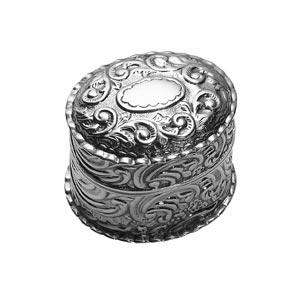
They got home, and the young girl asked, if Naseem had a little box or something, say, in silver, with some religious Koranic inscriptions on it. Naseem was completely dumbstruck ...
"Why do you ask ? And how did you know, that I had such a little box? " she asked.
"I didn't really know," her friend said . " But in our religion, a special gift gets even more special when enclosed in something which has a blessing on it . So we sometimes enclose little things in boxes with pictures of Ganesha and so on.."
Naseem went in, and came out with a lovely little box with something like blessings from the Koran inscribed in Arabic on it. Her mother had got this for her on her pilgrimage to Mecca several years ago.
The engagement was duly conducted at the girl's parents' place. As the marriage date neared, in typical Indian style (regardless of religion), some relatives of the super conservative type would enjoy commenting , where none was required. Discussions amongst themselves, so designed that they would get back to Naseem and her husband. Her husband was a respected elder in the mosque, and no one dared say anything in his presence.
The marriage happened, the neighbor couple and their 3 year old son, were accorded the honor that is normally reserved for the best-man-and-maid-of-honor type folks.
Then one day after the guests had left, and the Hyderabad grandma was spending a relaxed few days at Naseem's, they were having a cuppa of cardamom-mint tea and the young neighbor and her son were visiting, in a typical rehashing-the-events session.
"You know, I have been wanting to tell you. " Naseem put her cup down, and proceeded to shell some pistachios she would be using that afternoon.
"My husband thinks your behaviour is actually a correct Moslem behaviour !
The younger woman suddenly paid attention . Grandma adjusted her scarf comfortably across her shoulder, chewed on a clove, and smiled an indulgent smile.
"You are educated, you work, but you are very dignified when you communicate with people you don't know, particularly with men. No airs. No coyness. You are so free with me and grandma, and you behave in so naturally helpful and respectful a manner with my husband, yet unafraid to ask questions that would help solve any problem. And at the end of the day, he was really impressed by you thinking about the box for the ring..... not just any box , but one with a Koranic inscription . It didn't strike any of my relatives, you know. ...."
The young girl watched her son playing nearby with Hamid's old toy cars, making revving noises amidst a spray of spit. He hadn't perfected that yet.
She didn't know what correct Moslem behaviour was supposed to be. She grew up with the same opportunities her brothers had, and had to compete for everything. All she knew was that people were people, religion was incidental, but there had to be respect.......
And she thought back to her parents who brought her up with deep respect for all religions, her school where she had best friends who were Jews, Moslems, and Christians, and her in-laws, who by virtue of having lived in another state , were so open to the various customs and rituals of other religions, and learnt to enjoy them with neighbors in those days...
People to people, the problem was so simple. Be a good neighbor. Help as you would, someone in your own family.
If only the countries listened. And followed the same rules.
The world would be such a wonderful place.......
**** Click the play button below to hear the marathi song "Sakhi Shejarini" made famous by Arun Date
|
Subscribe to:
Posts (Atom)